Celebrating 270 years of Wolfgang Amadeus Mozart
Our Provincial Historian Tony Hales, describes how much Freemasonry meant to the famous composer
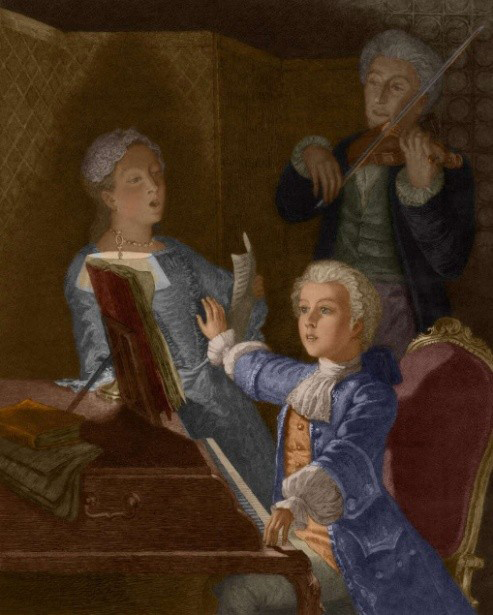
Born in Salzburg on 27th January 1756, Wolfgang Amadeus Mozart’s life was like a whirlwind tale filled with genius, glamour, mischief and a deep conviction.
He wasn’t just talented, he was otherworldly. By five he was composing, by six he was dazzling European royalty, and by the time most children were still learning to read, he was already shaping the future of Western music. His father, Leopold, nurtured his brilliance while his sister, Maria Anna, was an exceptional musician herself and became his first duet partner and closest creative ally. The Mozart home pulsed with music, ambition, and a sense that Wolfgang was destined for something extraordinary.
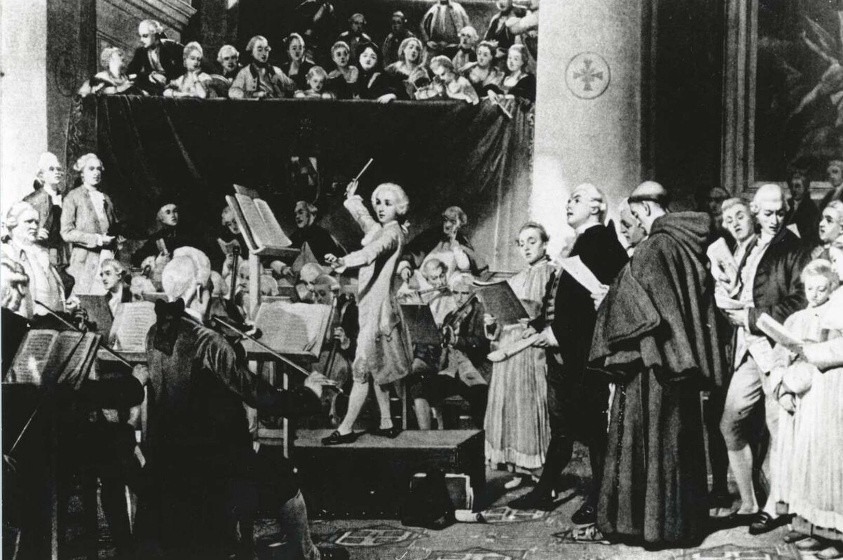 Much of his childhood was spent on the road, performing in glittering courts from Paris to London to Rome. These journeys were exhausting, but they opened his world. Every country left its imprint on him, enriching the voice that would later define his symphonies, operas, and concertos. Along the way he met Johann Christian Bach, whose influence helped shape the elegant, expressive style we now associate with Mozart.
Despite living only 35 years, he created more than 600 works including operas that still ignite standing ovations, symphonies that shimmer with clarity, and piano concertos that feel as alive today as they did centuries ago. His music is celebrated for its emotional honesty, its sparkle, and its effortless beauty.
But behind the genius was a man full of colour. He adored flamboyant clothes and elaborate wigs. He had a wicked sense of humour, loved wordplay, and even kept a pet starling whose song he once turned into a composition. His letters reveal warmth, affection, and a playful spirit that made him unforgettable to those who knew him.
 And woven through his adult life was something many people overlook: Freemasonry. Far from a casual affiliation, it became a meaningful source of community, inspiration, and philosophical grounding. Mozart embraced the Masonic ideals of brotherhood, enlightenment, and moral integrity. They resonated deeply with him, especially during periods of personal and financial struggle. Several of his works, including The Magic Flute, are infused with Masonic symbolism, celebrating themes of wisdom, virtue, and the triumph of light over darkness. For Mozart, Freemasonry wasn’t just a club, it was a guiding compass and a creative spark.
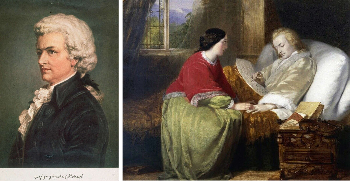
His final years were marked by financial stress and declining health, yet he continued to compose with astonishing intensity. His Requiem, left unfinished at his death, remains one of the most powerful pieces in the classical repertoire and a reminder of both his brilliance and the tragedy of a life cut short.
Even so, his influence didn’t end with him. Beethoven, Schubert, and generations of composers built on the foundations he laid. Today, his music still enchants, empowers and inspires. Proof that some spirits burn too brightly to ever fade.
Pictures:
Top: The Mozart Home pulsed with music - ©Photo by Science Source/Photo Researchers History/Getty Images
Right: Mozart composed over 40 symphonies from age eight - ©API/Gamma-Rapho via Getty Images
Bottom - Left: Portrait with signature - ©Hulton Archive/Getty Images Right: Working in his Requiem, unfinished at his death - ©DEA / A. DAGLI ORTI/De Agostini via Getty Images