Parallel lives of Freemasons Laurence Dermott and Thomas Dunckerley
News stories bringing the history of Essex Freemasons alive to a modern audience
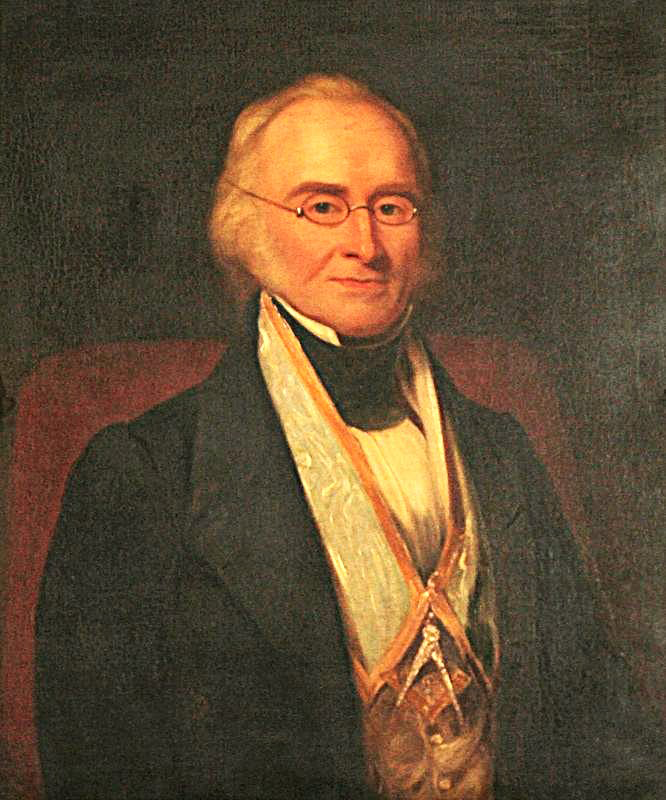 The Amazing Parallel Lives of two Most Excellent Freemasons, Laurence Dermott and Thomas Dunckerley, our first Provincial Grand Master.
BOTH LIVED 71 YEARS
Laurence Dermott (b. Ireland, June 1720) and Thomas Dunckerley (b. England, 1724) both lived 71 years. Though Dermott was aligned with the Antients and Dunckerley with the Moderns in Craft Masonry, both were passionate advocates of the Royal Arch. They both dedicated their lives to Freemasonry through hard times as well as in prosperity.
BOTH WERE EXALTED IN THEIR MOTHER LODGES
Dermott was Initiated into Lodge No. 26 in Dublin in January 1741, became Worshipful Master in 1746, and was Exalted that April, one of the earliest Royal Arch references. He moved to London in 1748 as a journeyman painter.
Dunckerley had joined the Royal Navy as a boy after running away from home and worked through the ranks to be a Master Gunner. He was Initiated, Passed and Raised on 10th January 1754 at the Lodge which met at the Three Tuns in Portsmouth and was Exalted that August alongside John Shakespeare and Caleb Whitehorn.
 BOTH PLAYED A SIGNIFICANT ROLE IN ROYAL ARCH
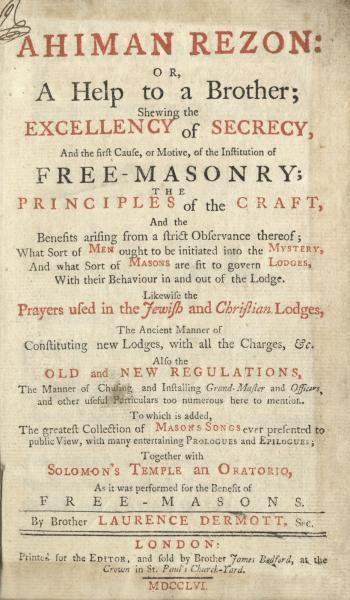
In London, Dermott initially joined a Moderns lodge but soon affiliated with Antients’ Lodges Nos. 9 and 10. On February 1752, the Grand Committee of the Antients elected him Grand Secretary (serving until 1771, and then as Deputy Grand Master). His 1756 publication ‘Ahiman Rezon’ helped grow the Antients and legitimised the Royal Arch as a Degree under a lodge warrant.
In Plymouth, the family home in the 1750s, Dunckerley joined two more lodges. In 1760 he received authority from the Premier Grand Lodge to inspect and regulate Masonic affairs abroad, including in Canada, and to form a lodge aboard HMS Vanguard. In 1764, Dunckerley left the Navy and moved to Somerset House, courtesy of the Duke of Devonshire. He remained deeply involved in Freemasonry, composing rituals for most Degrees. In 1765, he joined the newly formed Excellent Grand and Royal Chapter as Third Principal, and in 1766 was appointed Grand Superintendent by First Principal Lord Blayney.
BOTH HAD SIMILAR PERSONAL LIVES
Both married widows and were survived by their wives. All their own children predeceased them. Dermott married three widows: Susanna Neale (d. 1764), Mary Dwindle (d. 1766), and Elizabeth Merryman (survived him). His only son died in infancy. Dunckerley married Anne Sherry in 1746. Their children, Mary Anne (d. 1780) and Thomas Jr. (d. 1791), both died before him.
 IN 1767 BOTH THEIR FORTUNES CHANGED CONSIDERABLY
Dermott took over the tenancy and management of the Five Bells Tavern in The Strand, previously run by his second wife Mary. He described himself as a vintner and later as a wine merchant. Spacious and centrally located, the Five Bells hosted concerts, meetings and public events. The Antients Grand Lodge met there from 1752 to 1771.
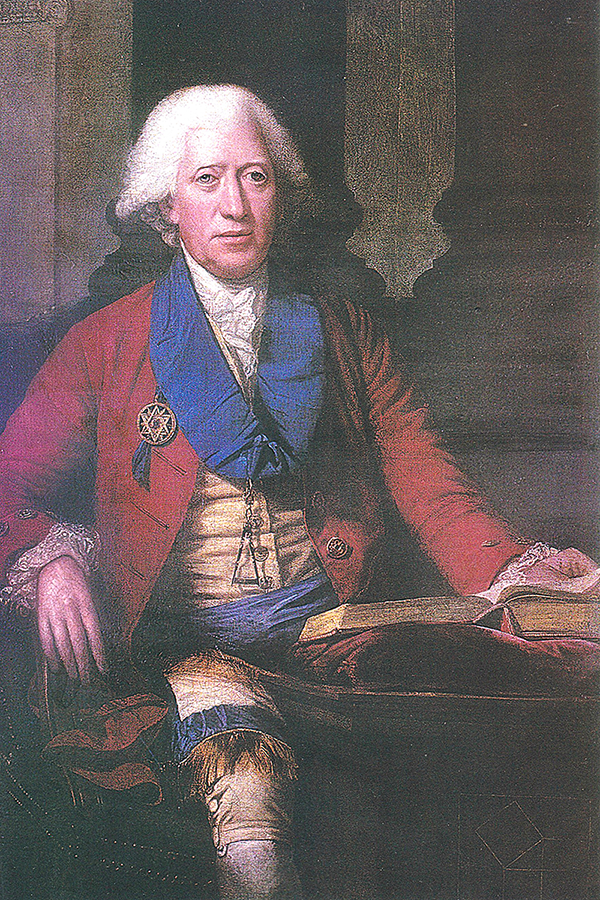
Dunckerley’s fortunes changed dramatically when King George III accepted his claim to royal illegitimacy. He received an annuity (rising from £100 to £800), apartments at Hampton Court Palace and Somerset House, a Civil List Pension, and further support from the Prince of Wales and Duke of York.
BOTH HAD A DISAGREEMENT WITH EACH OTHER
In the Chair for his penultimate Grand Lodge meeting as Deputy Grand Master, on 3rd December 1777, it is recorded:
“Heard a letter from No. 200, Salisbury, setting forth that a Mr Dunckerley, PGM under the ‘Moderns’ had taken upon him to doubt the legality of their Warrant.”
The DGM’s letter to the GM and his reply were also read out as was a letter from No. 174, Southampton, similar to that from No. 200. The Antients Grand Lodge Officers resolved:
 “That thanks be given to D.G.M. Dermott for his attention to this matter, assuring him of their readiness to rescue his character from the false and malicious insinuations of Mr Dunckerley. His trusty conduct during 26 years entitle him to the favour of all well-wishers of the Antient Craft, as appears by Grand Lodge transactions from 1751 to this date.”
BOTH LOCATIONS OF THEIR GRAVES ARE UNKNOWN
Dermott’s last meeting in the Lodge was in 1789. He died in June 1791. His last known residence was in Mile End but was buried at St Olave Church, Southwark. The church was completely demolished in 1928 and the site is now the private wing of the London Bridge Hospital.
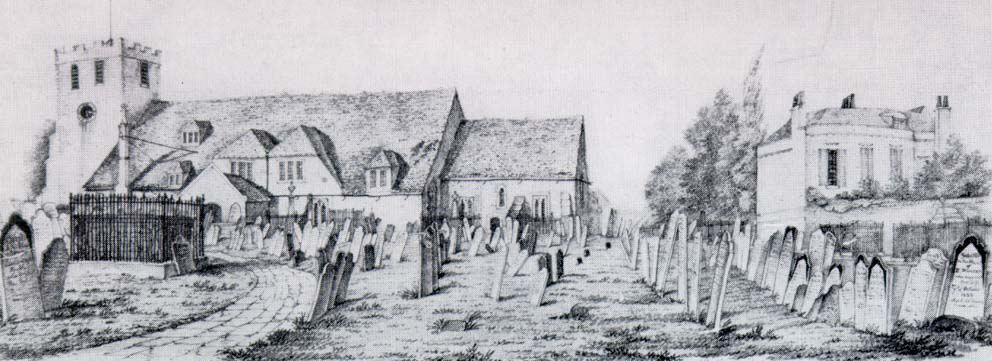
Dunckerley died in Portsmouth in November 1795 and was buried in St Mary’s Churchyard, Portsea. A new church was later built on the site during which many gravestones were removed and not recorded.
The amazing parallel of Laurence Dermott and Thomas Dunckerley still remains today. Two of the world’s Most Excellent Freemasons ever to have lived are buried but no one knows exactly where.
Photo credits: Museum of Freemasonry (unless otherwise stated)
Top: Laurence Dermott on Alchetron
Right: Ahiman Rezon
Lower Left: Thomas Dunckerley
Right: Sketch of St Mary’s Churchyard Portsea c. 1800